Our democratic republic thrives on inquiry, yet today’s student journalists are increasingly choosing silence over scrutiny — a retreat that threatens the future of accountability in America.
I was recently honored with the Columbia Scholastic Journalism Association’s Gold Key, its highest award for “outstanding devotion to the cause of the school press.” I take this recognition seriously. It gives me a platform, and I plan to use it, because what I see at these conventions is a generation of young journalists learning, right at the start of their careers, that the safest story is no story at all.
A high schooler in a New Voices state, where legislation offers greater protection for student journalists, recently shared his desire to cover local student walkouts protesting ICE activities in his community. However, he feels hesitant, fearing administrative backlash and potential consequences that could arise from drawing unwanted attention to his school amid the current political climate.
Another student at a private secular school wants to write an op-ed about being pro-life in her progressive community. She decides not to. Every article is reviewed before publication, and she already knows what the response will be.
A third student at a large urban public school in Texas is too afraid to write about his political views. He worries not only about what his classmates might think, but also about how teachers and college admissions officers might judge him if they look him up online.
There are many more stories just like these. And as somebody who often meets with student journalists and their advisers at local and national conventions, I’ve heard them all. Their stories are similar, and it’s worrying.
And yet, to be clear, student journalists are covering bold topics with bravery and exceptional skill. Just look at how young reporters have localized coverage of ICE in their own communities, including a powerful editorial from wlhsNOW, the student news site of West Linn High School in Oregon.
“ICE doesn’t have any place in schools, and it should stay that way,” the editorial board writes, not backing down.
Or consider The Life of Keith LaMar by Madilyn Shoop-Gardner and Caitlin Stehr of Scot Scoop, the student news publication of Claremont High School in Belmont, California. The reporters do an exceptional job detailing the experiences of a death row inmate who maintains his innocence, using immersive digital storytelling, interactive graphics, and striking visuals to enhance the piece.
I was similarly struck by Laila Taraporevala’s story in The Standard, the American School in London’s student publication, I’m not slim enough”: Athletic body stereotypes invade the student-athlete community.
Even with anonymous sources, its impact is undeniable. As one student says, “I’m constantly just looking in the mirror, not even to see how I’m playing. I’m just looking at how my stomach looks.”
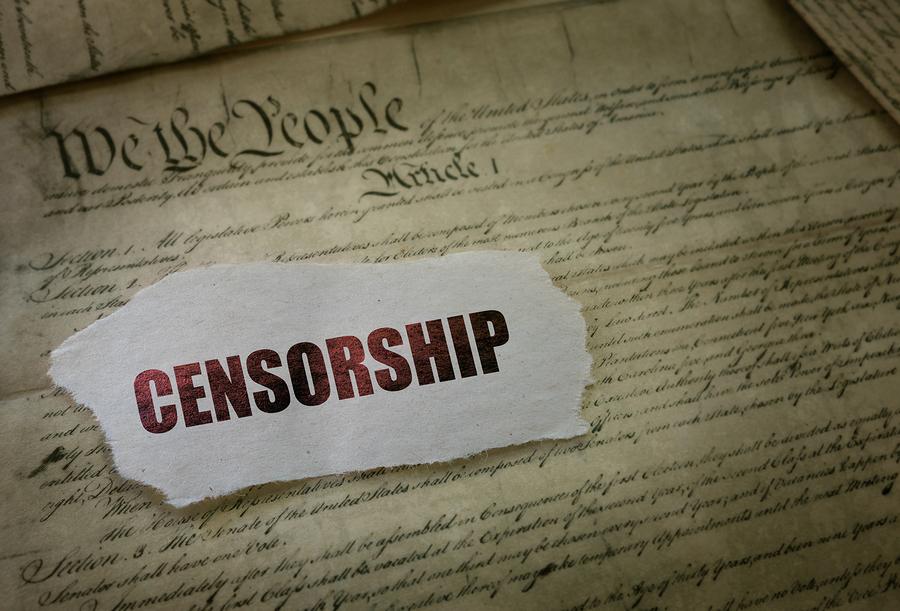
At the same time, self-censorship — stories never pitched, opinions never written, and questions never asked — continues to weaken student press freedom from within.
Even students who know their rights, including in New Voices states, still hold back, telling me that they don’t want to upset anyone. They’re also focused on college applications, want support from teachers and administrators, and fear being seen as troublemakers.
This is always painful to hear.
When I suggest that colleges should reward student journalists who report content responsibly, too many students just smile and disagree. They have already thought it through, and in their calculus, the risks outweigh the benefits.
All of this is happening even though there has been real progress. Eighteen states now have New Voices laws, thanks to a student-led, nonpartisan grassroots movement. These activists have spent years working to undo the harm caused by the Supreme Court’s 1988 Hazelwood v. Kuhlmeier decision, which greatly reduced student press rights and gave school administrators broad power to censor school publications. These protections matter a lot.
But having legal protection is not the same as feeling safe. A student might have every right to publish a story but still choose not to, because the law cannot shield them from other consequences they fear, whether real or imagined. The gap between what students are allowed to do and what they feel comfortable doing is where self-censorship happens. And that gap is large.
This is not about politics. The students I meet with have different beliefs, go to different kinds of schools, and live in various parts of the country. What they have in common is that many weigh the risks and end up staying silent. Today, as political tensions rise and schools become centers for debates about immigration, identity, and free speech, this silence is only growing.
That lesson will stay with them long after high school. It will follow them into college newsrooms, into professional journalism, and into any role they take on as informed citizens. When a student learns to self-censor, it becomes a lasting habit.
Students and their supporters have spent decades building legal protections for student press freedom. Now, we must focus on something harder to create with laws — a culture that helps students believe these protections are real, that their journalism matters, and that telling the truth carefully, ethically, and responsibly is always worth the risk.
To get there, adults in positions of power affirm that, as long as students report ethically, they will be supported — even when their coverage isn’t always rosy. In some cases, they should even be celebrated. The alternative leaves students entering professional newsrooms afraid to hold power to account. That’s a scary proposition — one I will fight against with everything I have.
Until then, too often, the most powerful censor in any school isn’t necessarily a principal with a red pen. It’s the student who chooses to never pick up a pen at all.